Rules
Product launch positioning vs messaging: the distinction that changes launch work
Positioning is the internal market choice; messaging is the external wording. It sequences sign-off before copy and links launch strategy and product marketing.
What to take away
- Product launch positioning vs messaging is a sequencing question, not a vocabulary debate.
- Positioning is an internal choice of market, competitive alternative, differentiated value, and proof.
- Messaging is the external wording that carries that choice to buyers, sales, and partners.
- Positioning must be signed off before launch copy starts, because copy without a chosen alternative will drift.
- If you cannot name the alternative and the proof, positioning is not ready for a launch date.
Positioning as an internal decision
Positioning answers who the product is for, what it replaces, and why the difference matters. It is a decision made inside the company before public language.
The output can be a one-page positioning statement with market, alternative, differentiated value, proof, and a short list of what the product is not. Product, marketing, and sales leaders sign that page before a writer drafts launch copy.
A Miro board or Notion page can hold the draft, but the sign-off is a management act, not a writing task. If the team cannot name the alternative, the statement is incomplete.
Positioning statement vs messaging framework
Messaging turns positioning into words for audiences. It covers value propositions, proof points, objection handling, channel copy, and sales talk tracks. A messaging framework is not the same as a positioning statement. The statement is a governance document. The framework is a production document.
Question it answers
- Positioning statement
- Who is this for, what alternative, and why different?
- Messaging framework
- What words, proof, objections, and channels express the choice?
Owner
- Positioning statement
- Product marketing with product and sales
- Messaging framework
- Product marketing with content and sales enablement
Sign-off timing
- Positioning statement
- Before the copy brief
- Messaging framework
- After positioning sign-off
The table shows the handoff rule. Positioning sets the choice. Messaging sets the wording. A writer who starts with the framework will invent a market and an alternative to fill gaps. That invented choice rarely survives a sales call.
When to write positioning before messaging
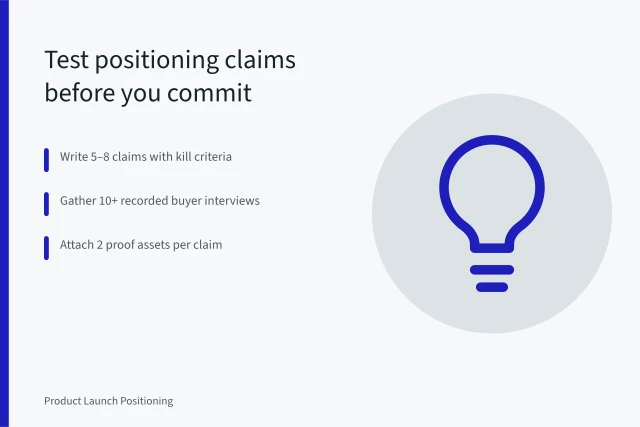
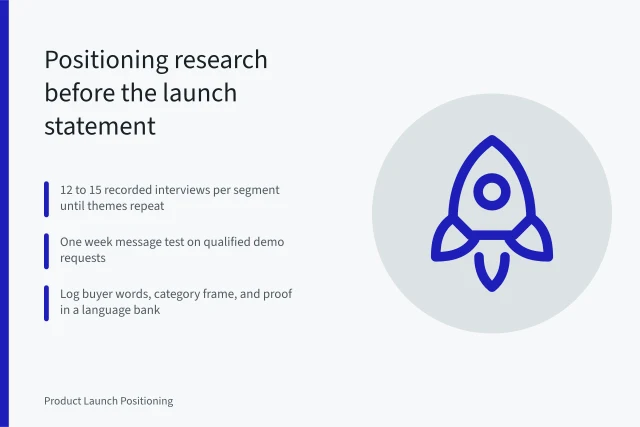
- Gather market evidence. Review buyer interviews, support tickets, win loss notes, and competitor pages.
- Write the positioning statement. Name the market, alternative, differentiated value, and proof.
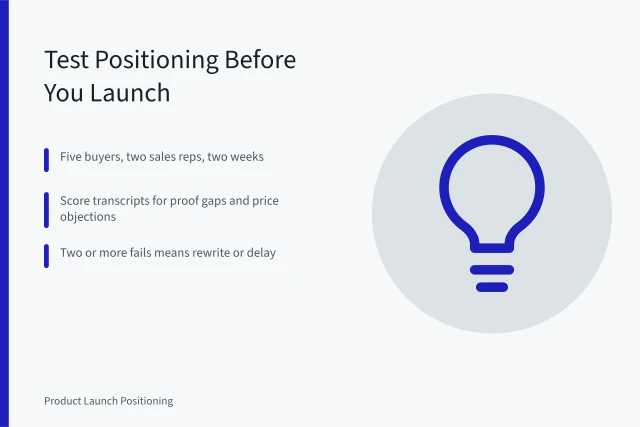
- Test the statement against sales objections. If proof is missing, change the claim or delay the copy.
- Sign off with product, marketing, and sales leaders. Record the date and the accepted tradeoffs.
- Write the messaging framework. Build headlines, proof points, objections, and channel variants from the signed statement.
The SBA launch guide treats market research, legal setup, and marketing as separate steps with their own timing, which is why positioning sign-off should sit before copy.
Before you write launch copy, read Go-to-market strategy in practice to see how buyer problem, product choice, pricing model and delivery limit are recorded. That page gives the launch plan a structure that positioning can feed.
Example: positioning before launch copy
A software team writes a landing page around "all in one workspace" before naming the alternative. Sales then finds buyers compare the product to a spreadsheet and a project tool. The headline changes twice. The demo script changes once. The positioning statement was never signed.
Copy cannot choose a market. Positioning chooses the market, and messaging explains the choice.
In a cleaner sequence, the team names the spreadsheet alternative first. It writes proof from customer workflows. It then hands the messaging framework to content, demand gen, and sales enablement. The launch copy follows the signed choice. Product launch positioning examples often show the same pattern: copy leads, sales corrects.
Positioning and messaging for US product launches
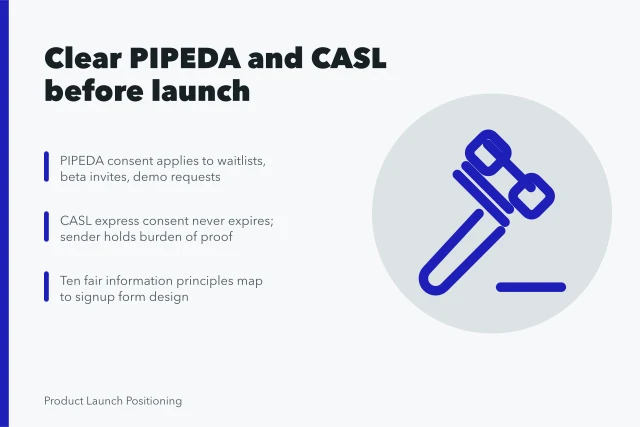
US launches add rule checks. The FTC advertising and marketing guidance requires claims to be truthful and non-deceptive, so messaging cannot outrun positioning proof. For consumer products, CPSC business education covers safety rules that can affect claims and timing.
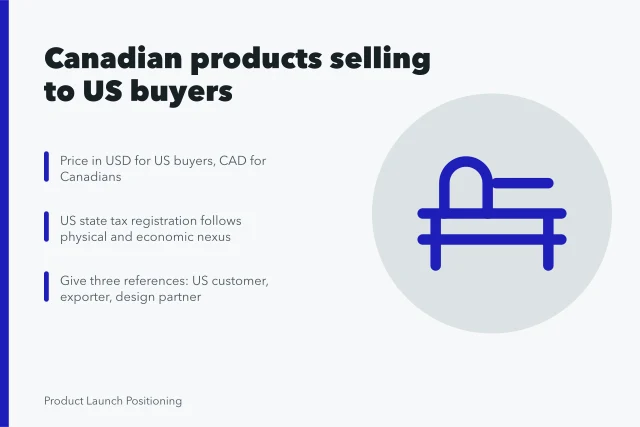
For Canadian sales, the Canada.ca business permits guide lists regulatory filings required before selling, which can change launch timing. Health Canada and ISED programs may also apply for health products or innovation funding, but the launch team should confirm scope early.
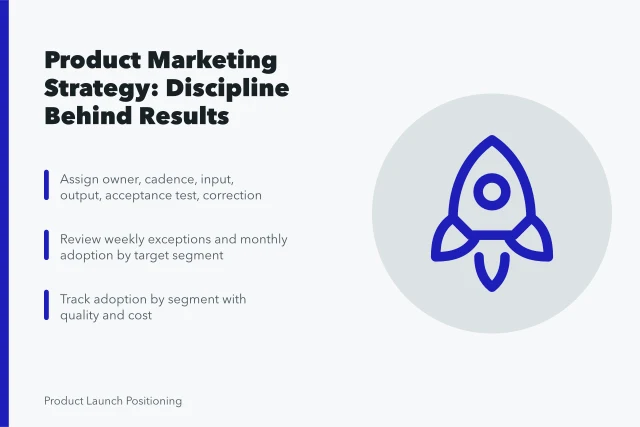
When positioning claims meet proof, sales handoffs, and segment adoption, read Product marketing strategy that survives to set the review loop. That page connects launch choices to pricing, enablement, and adoption measures.